
Answers to the questions we hear most often. Don’t see yours? Get in touch.
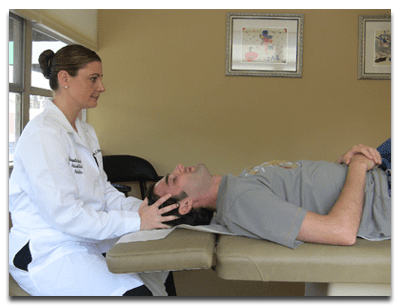
What is the difference between a D.O. and an M.D.?
A D.O. is a doctor of Osteopathy and an M.D. is a medical doctor. Both complete four years of medical school with similar curricula and board certifications. D.O.s, however, focus on the anatomy of the human body and take additional classes in Osteopathic Manipulative Medicine (OMM). Both must complete a residency. D.O.s can do any residency an M.D. can — and there are some D.O.-approved residencies that M.D.s cannot, because M.D. programs lack OMM training.
What is the difference between a D.O. and a Chiropractor?
A D.O. has four years of medical school training and must complete a residency to practice in any field of medicine. Chiropractors attend Chiropractic school and do not receive the same extensive medical training. Chiropractors tend to focus on the spine; D.O.s apply manipulation to the entire body, treating it as an interrelated whole.
What insurances do you accept?
Like most D.O.s specializing in Osteopathic Manipulative Treatment, we are a fee-for-service practice: we ask patients to pay at the time of the visit. We provide an encounter form you can submit to your insurance company for reimbursement at whatever rate they offer.
Do you “snap, crackle, and pop” the patient?
Many patients dislike High Velocity, Low Amplitude (HVLA) techniques — the ones that “crack” the back or neck. Dr. Olex is trained in HVLA techniques but does not feel they are necessary, and uses gentler approaches instead.
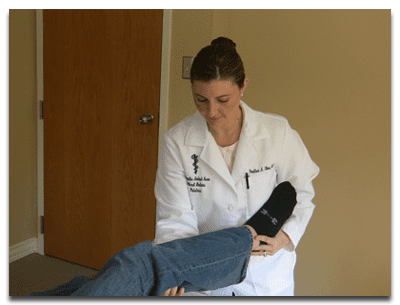
What should I wear to a treatment?
Whatever you are most comfortable in. Loose-fitting clothes are preferred.
Is there anything I need to do after a treatment?
Please stay well hydrated after a treatment. You may feel energized, but we recommend avoiding heavy exertion immediately following.
Will I feel sore after a treatment?
Most patients feel great — and often have more energy than they’ve had in a long time. Some do experience mild soreness a day or two after. Imagine not stretching for ten years and then stretching for hours: a little soreness the next morning wouldn’t be surprising.